
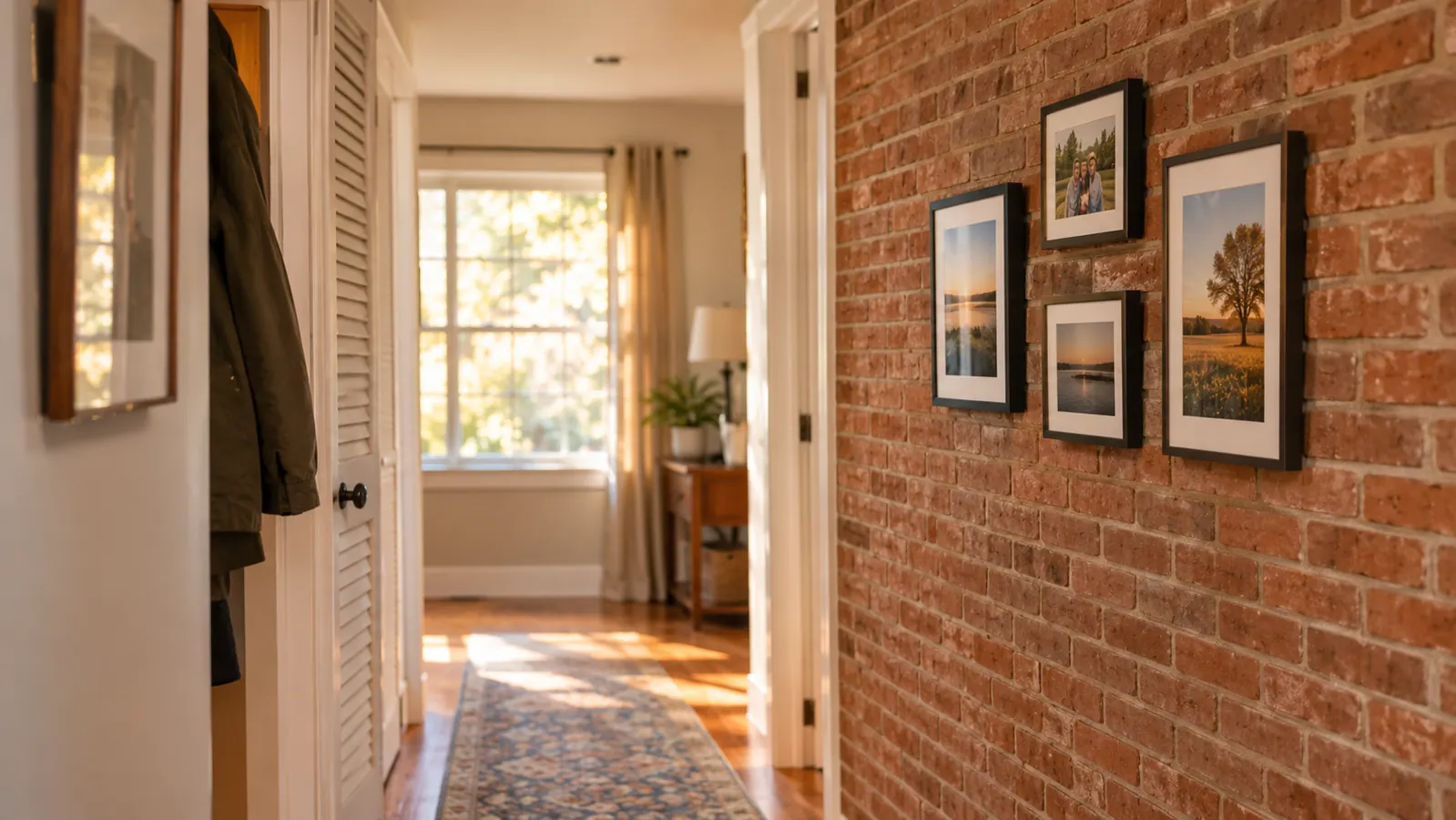
Six months ago I hung a 5 by 7 picture frame on the hallway wall of the ranch house Carol and I share outside Wichita, and it has not come down since. That is the entire idea. The ANZAKY picture frame diversion safe is an ordinary-looking frame with a shallow compartment behind the photograph, and I mounted it there because 31 years as a homeowner insurance claims adjuster taught me where a thief's hands go first. Bedroom closet. Top dresser drawer. The linen cabinet. Under the mattress, which is where half the country seems to think nobody will ever look. A hallway wall with three other pictures on it does not make that list, and that is the only reason this thing works.
I have four other containers in this house doing related work. A DocSafe organizer for the paper, a SentrySafe bolted to the walk-in closet floor, an ONNAIS beside the bed, a small Yuanshikj keypad box in Carol's closet. What none of them do is sit out in the open where nobody thinks to look, and that is the gap the ANZAKY fills. It carries 4.6 stars across 575 ratings, which is about what I would expect for a well-made frame that happens to have a compartment in it, and not a bit more than that.
The Quick Verdict
A convincing frame, a genuinely usable compartment, and a fireproof bag that beats a shoebox without coming close to a rated safe. Buy it for hiding, not for fire protection, and measure what you plan to put inside before you order.
Amazon Check Today's Price →Six months on my hallway wall and not one person has asked about it
That is the review, honestly. A frame that looks like the two beside it, with a tray behind the photo for the papers you would grab in a hurry. Check the current listing for the compartment dimensions and the bag details before you buy.
Amazon Check Today's Price on Amazon →How I've Used It
I hung it at eye level between the coat closet and the door to the garage, next to a photo of my grandson in a baseball uniform and a print of a Kansas wheat field Carol picked up at a craft fair. That placement is the whole trick. Three frames of slightly different sizes, one of them a little deeper than the others, and the eye slides right past all three. I used what I had in the shop to hang it and I found a stud first, because the frame plus contents runs around two pounds and I have watched too many pictures come off a wall in the middle of the night in other people's houses.
Loading it takes about a minute. The back panel comes off, the compartment is a shallow tray cut into the frame body, and the panel seats back on and fastens with metal buckles. There is no keypad to fail and no battery to die, which for a man of 71 with a drawer full of dead nine-volts is a feature I did not know I wanted. Once a month I take it down, check that the buckles are snug, and hang it back up. That is the entire maintenance schedule.
The listing also calls it tabletop display, and the back panel doubles as a stand, so you can lean it on a dresser if you like. I tried that for a week and moved it. A frame standing alone on a dresser with no other frames around it draws the eye, and the whole point is not drawing the eye. On a wall in a group of pictures it disappears. If you are going to use it on a shelf, put it with other frames or you have spent money on a very small box.
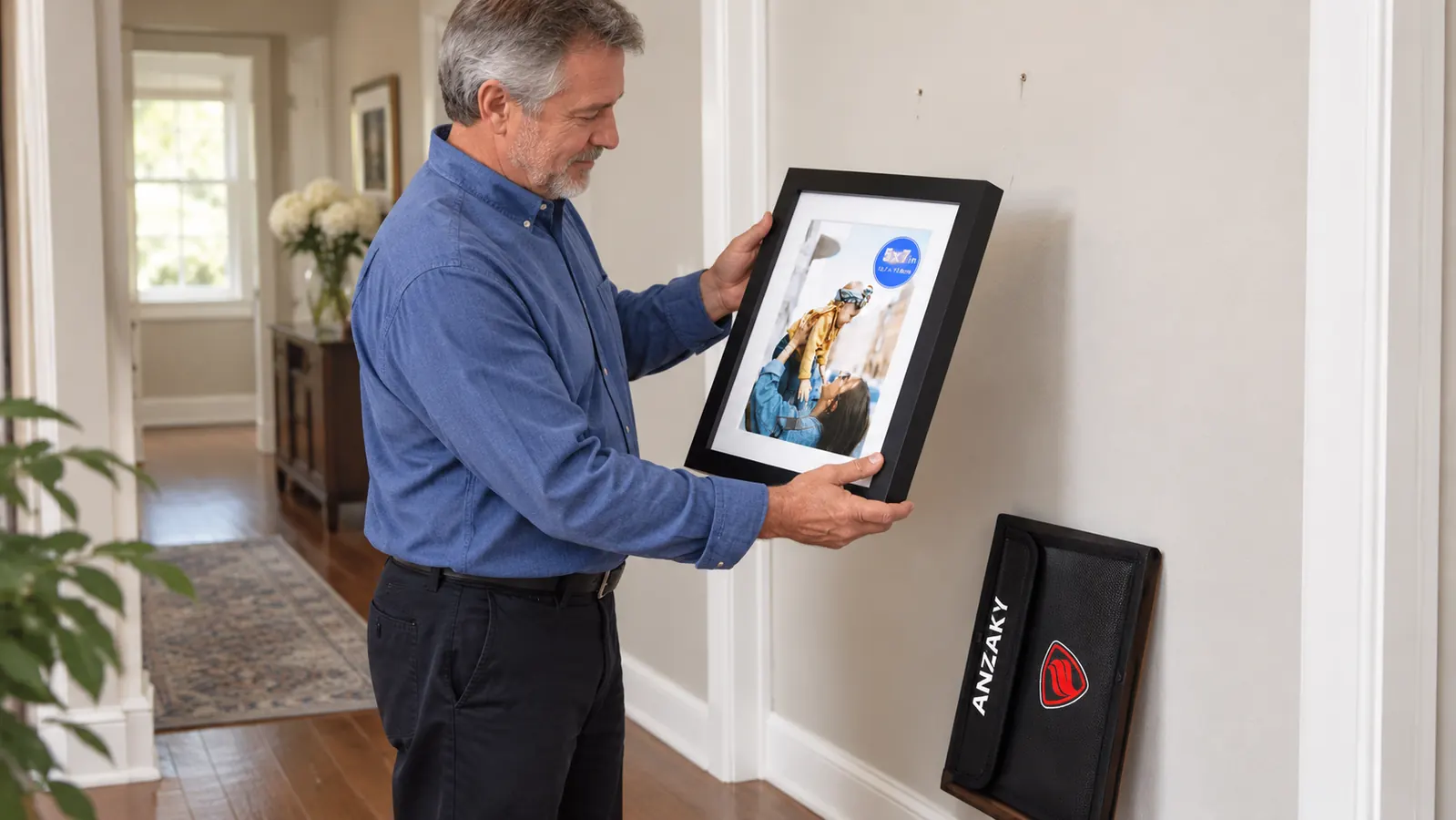
What Actually Fits in an 8.6 by 6.6 by 0.8 Inch Compartment
Eight and six tenths inches wide, six and six tenths tall, eight tenths deep. Say that depth number out loud once, because it is where most buyers get disappointed. Eight tenths of an inch is a little less than the thickness of a paperback book. A passport, folded birth certificates, a deed folded in thirds, a will in a legal envelope: all fine. A stack of paper an inch and a half thick: not fine, and no amount of pressing will make it fine. The frame body is 1.55 inches deep overall, and part of that is molding and the front, not storage.
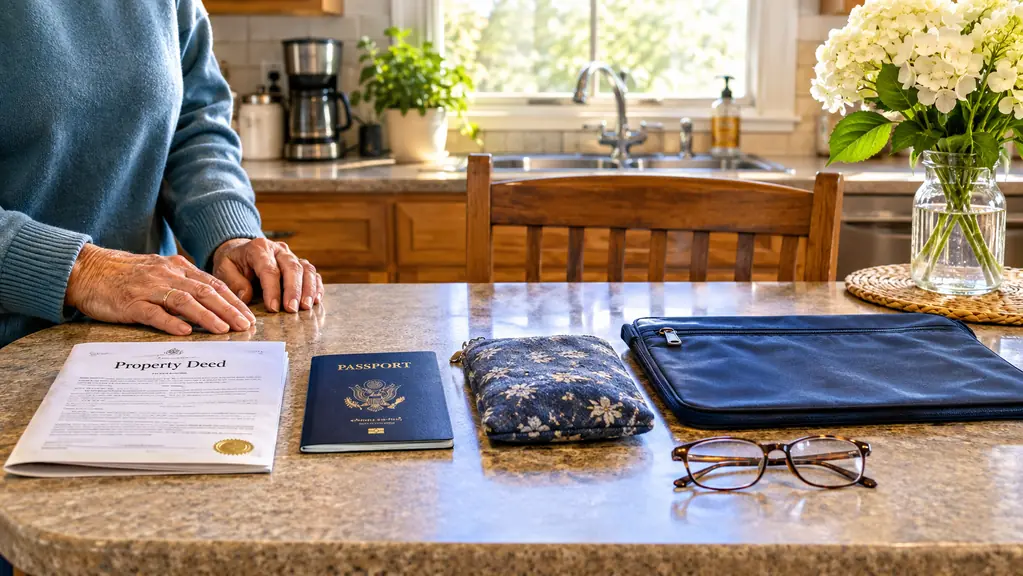
What I keep in mine: copies of two deeds, both passports, folded copies of our wills, a thumb drive of family photos, and a flat envelope of emergency cash. The originals of the wills live in the bolted-down SentrySafe. What sits in the frame is what I would want if the house flooded and I had five minutes to think. That distinction matters and I will come back to it.
What does not fit, and I tried. The coin collection, the one that was my father's. Fifteen or so pieces in flips will fill the tray, and the weight starts working against a shallow engineered-wood frame hung on a wall. The capacity is listed at 1.9 pounds, so be honest with yourself about that. Carol's mother's jewelry fits if it lies flat, and most of it does not. The handgun does not fit, and I would not put one there anyway. That is a different job with a different set of rules, and mine lives in the ONNAIS beside the bed where I can reach it in the dark.
Eight tenths of an inch of depth decides whether this product works for you. It holds a passport and a deed without folding them twice. It does not hold a coin collection, and wanting it to will not change the math.
The Fireproof and Waterproof Bag, in Kitchen-Table Terms
The frame ships with a separate bag that the listing calls fireproof and waterproof, and that bag is the most misunderstood part of the package. In my working years I handled claims on fires where the flames never touched the contents. The heat did. A frame house full of modern furniture reaches 1,400 degrees in a room in well under ten minutes, and paper turns brown and brittle at around 350. So the only question that matters with any fire container is: for how long, at what temperature, and tested by whom.
The standard to look for is a UL 72 classification, written as a class number and a time, something like Class 350 for one hour. That means an independent lab put the container in a furnace and the inside stayed under 350 degrees for that hour. My SentrySafe carries that label. I could not find a UL class printed on the ANZAKY bag or listed in the product information, so I am treating the fire claim as the manufacturer's own word, not a lab's. That is not the same as calling it useless. A foil-lined bag slows heat and keeps water out, and it is a good deal better than a shoebox in a dresser drawer.
Water is honestly the bigger risk where I live. Our basement took on about four inches in a spring storm, and I lost a box of tax records that were sitting on the floor in a plastic tote that turned out not to be waterproof at all. A sealed bag inside a frame on a hallway wall, two feet above the floor, is a better arrangement than that tote ever was. If you are in a floodplain, none of this replaces getting the real documents into a rated safe or a bank box. It replaces the drawer.
How Convincing It Looks, and How It's Built
The frame is MDF, which the listing calls engineered wood, and it weighs 1.8 pounds empty. MDF is what most mid-priced frames are made of and it takes a finish well. Mine has been on a wall through a Kansas summer with the air conditioning running and a Kansas winter with the furnace running, and the corners are still tight. No warping, no separation at the joints, no rattle when the garage door shakes the wall.
The compartment is a tray routed into the frame body rather than a tin box glued in, and the back panel seats flat against it. The metal buckles are the weak point over the long haul. They are small, they are not a lock in any honest sense of the word, and somebody who knows what they are looking at could have that back off in under a minute with a butter knife. That is true of every diversion safe I have handled. The protection here is that nobody looks, not that nobody can open it.
One thing I would tell any buyer: check the size against your wall before you commit. At 8.3 inches wide and 9.9 inches tall this is a small picture, closer to a snapshot frame than a portrait. In a hallway of large art it will look like a mistake, and a mistake is memorable, and memorable is the one thing you cannot afford. Among 5 by 7 and 8 by 10 frames it disappears entirely.
What It Won't Do
It will not stop a burglar who has already decided to take the pictures off the wall. There is a version of this crime where somebody walks through with a pillowcase and empties every drawer in four minutes, and there is a version where somebody knows there is a container in the house and goes looking for it. This product only helps with the first one. I want that in plain language because the category is full of claims it cannot back up.
It will not protect paper from a house fire the way a rated safe will, and it will not protect anything from a determined child. I say that as a man with four grandchildren who visit often. A kid who is curious enough will eventually take the frame down, and if the item inside matters, put it in a locked container with a key you actually control. Hiding is for adults who do not know you own it.
And it is not a substitute for the bolted-down safe in the closet. I keep saying that and I will keep saying it, because I have watched people move a deed into a clever hiding spot and then get rid of the real safe to free up floor space. The order is a rated safe, bolted down, for the things you cannot replace, then a hiding place like this for the things you want out of the obvious drawer. Not the other way around.
What I Liked
- Looks like the other frames on the wall, which is the entire job
- The tray holds passports, deeds, a will and flat cash without folding anything twice
- No keypad and no battery to die; the back panel fastens with metal buckles
- Ships with a separate fireproof and waterproof bag, so contents get a second layer
- Wall mount or tabletop, and the back panel works as a stand
Where It Falls Short
- Eight tenths of an inch of interior depth is less than most buyers picture
- No UL fire classification printed anywhere I could find
- The metal buckles are not a lock; the back comes off fast with a little prying
- At 1.8 pounds empty it is a small frame and looks wrong among large art
- Nothing anchors it beyond your own hanging method
Who This Is For
This is for the homeowner who already has a drawer, a shoebox or a filing cabinet doing a job it was never meant to do. If your passports and your deed and a bit of cash are in the top dresser drawer right now, the ANZAKY is a twenty-minute improvement on that and it does not require you to learn a keypad or remember a combination. It suits a house with a hallway, a spare bedroom wall or a bookshelf that already has frames on it.
It also suits people who travel and want one flat envelope of documents and backup drives out of the obvious places while they are gone. And it suits anyone who has been putting off the bigger purchase. This is the cheap first step that gets the paper out of the drawer today, while you save up for the rated safe you actually need.
Who Should Skip It
Skip it if what you need is fire protection with a number behind it. Skip it if you are storing jewelry with any bulk to it, a coin collection, or a handgun, because the depth and the weight limit will beat you. Skip it if the only wall you have is a hallway of large art, since a small frame among big ones reads as odd and odd gets remembered.
And skip it if you want a lock. This is a hiding place with buckles on the back, and if the person you are hiding things from lives in your house and is old enough to read, buy something with a real lock and keep the key on your person.
The best hiding place in my house is the one nobody has ever looked at
Six months, one monthly buckle check, and it has done exactly what I bought it to do. Measure your documents against the 8.6 by 6.6 by 0.8 inch tray first, then decide.
Amazon Check Today's Price on Amazon →