
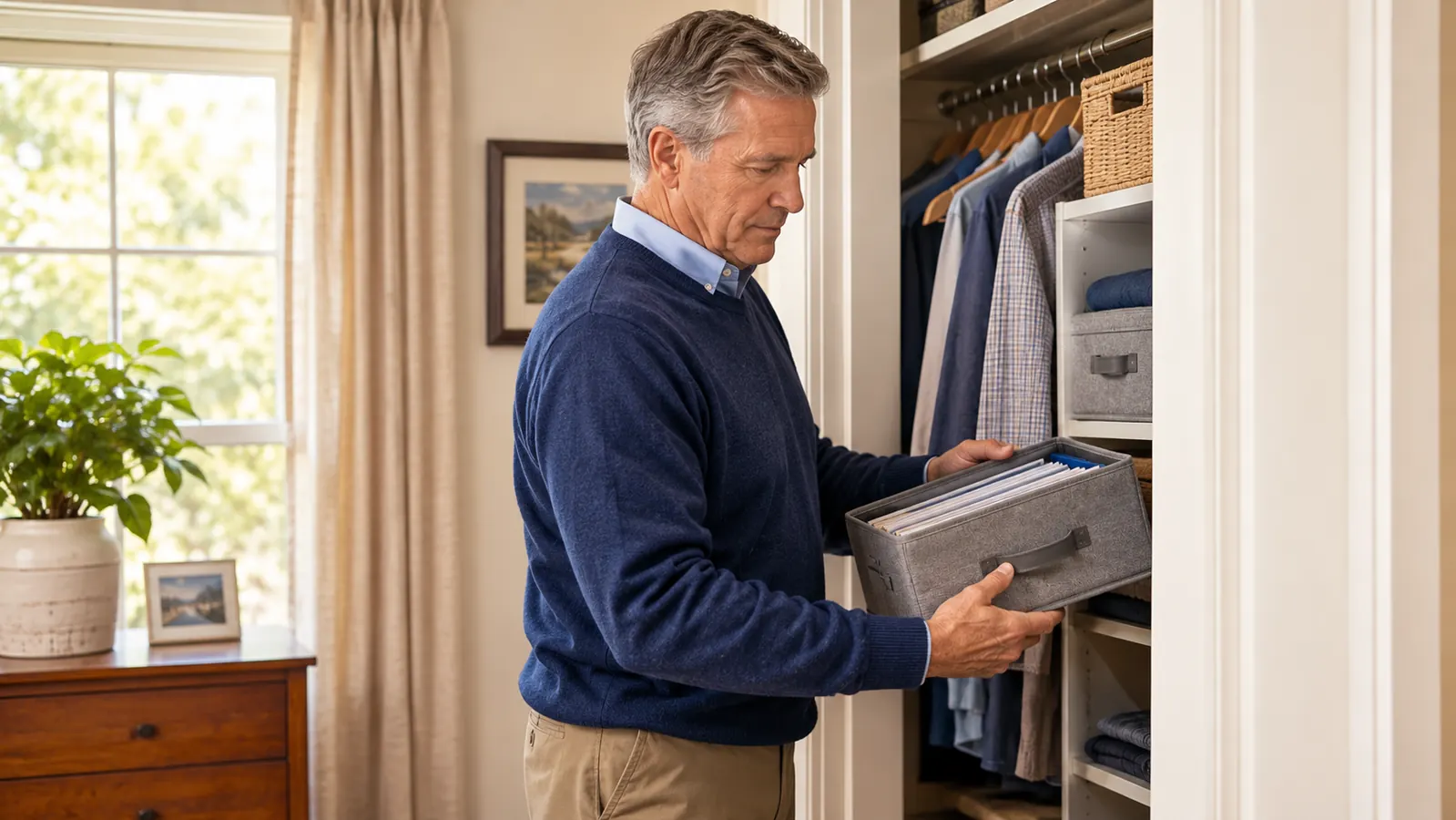
Short answer: for a walk-in closet shelf in a normal ranch house, the DocSafe 5200°F Fireproof Document Organizer Box is the one I reach for first. I bought mine about two years ago, after thirty-one years of walking through other people's burned and flooded homes as a claims adjuster. The DocSafe is 15 by 11 by 4.1 inches and weighs 16 ounces. It slides onto a shelf beside the towels, and it holds the papers my wife Carol and I would actually need to grab. A hard-case document box has its place, but that place is usually a higher shelf, a deeper shelf, or a floor safe, not the shelf at eye level in a bedroom closet.
Here is the short version. The DocSafe wins on organization, portability, and fitting a real closet. A hard-case document box wins on rigid protection and stacking. If you want one box for deeds, passports, birth certificates, a few backup drives, and the paperwork for Carol's mother's jewelry, the soft-sided DocSafe is easier to live with. If you are protecting a coin collection in holders, a handgun, or anything that can be crushed, a rigid box or a real safe is the better tool. They are not the same job.
| DocSafe 5200°F Organizer | Hard-Case Document Box | |
|---|---|---|
| Fire rating | 8 fireproof layers, up to about 5200°F per the maker | Usually a stated lab class and time, but you have to read the label |
| Water resistance | Waterproof per the listing | Depends on the gasket; many are not |
| Rigid protection | Soft shell; flexes under a stack of boxes | Rigid walls hold their shape |
| Lock | Combination lock on the zipper | Often a key lock or combination, model by model |
| Organization | 8 compartments, 8 passport mesh pockets, 16 card slots, 4 U Disk pockets, 7 folder layers | Usually one cavity or a few dividers |
| Footprint | 15 by 11 by 4.1 inches | Bulkier and often taller |
| Weight | 16 ounces | Heavier; not a grab-and-go item |
| Stacking | Soft top cannot carry much weight | Rigid lid can take a stack |
| Best for | Papers, passports, cards and drives you need to grab | Odd-shaped items that need rigid walls |
Where DocSafe Wins
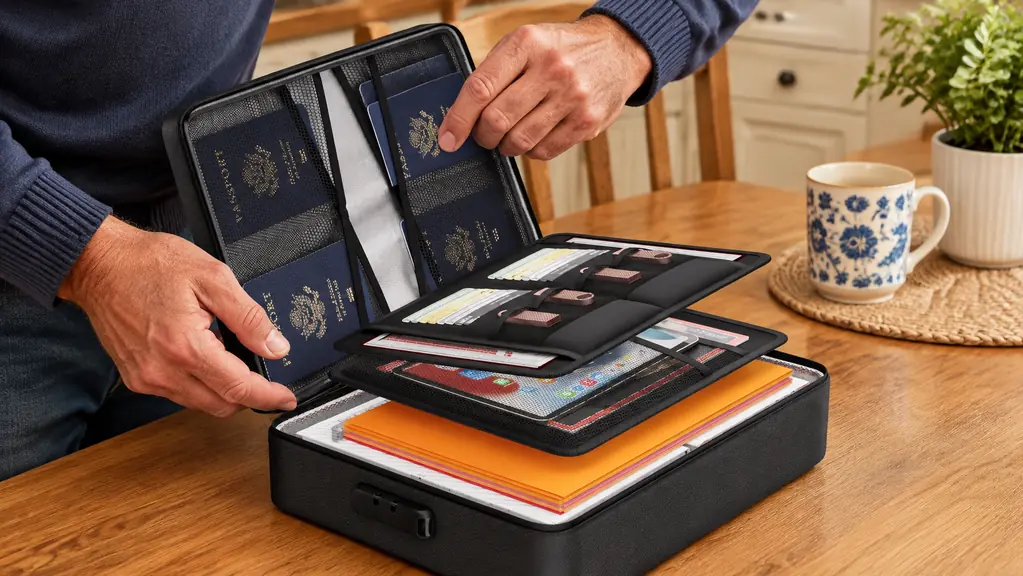
DocSafe wins the part of the job that happens every day: finding things and putting them back. The organizer has 8 compartments, 8 passport mesh pockets, 16 card slots, 4 U Disk pockets, and 7 folder layers. That sounds like a lot of pockets. In practice it means a passport is not loose in the bottom of a box with a car title and a dental card. I can put my hand on the folder layer I want without pulling the whole thing apart on the bed.
DocSafe also wins on footprint. The size is 15 by 11 by 4.1 inches, and the weight is 16 ounces. On a 12-inch closet shelf, I set it with the 15-inch length running along the shelf and the 11-inch width facing out. It leaves room for a shoebox beside it. The strong handle makes it a grab-and-go item. When we travel, I can carry it to the kitchen table, take out the passports, and put it back without moving a stack of heavy boxes. A hard case that weighs several pounds does not get that kind of use. It gets left on the shelf because moving it is a chore.
One more DocSafe win is the combination lock on the zipper. It is not a bank vault. It is a lock that keeps a curious grandchild out of the passport pocket and keeps a contractor from unzipping the bag during a bathroom break. For papers, that is the right level of lock. A hard case with a key lock can be better, but only if you can find the key. I have seen more people lose the key than lose the papers.
Where a Hard-Case Document Box Wins
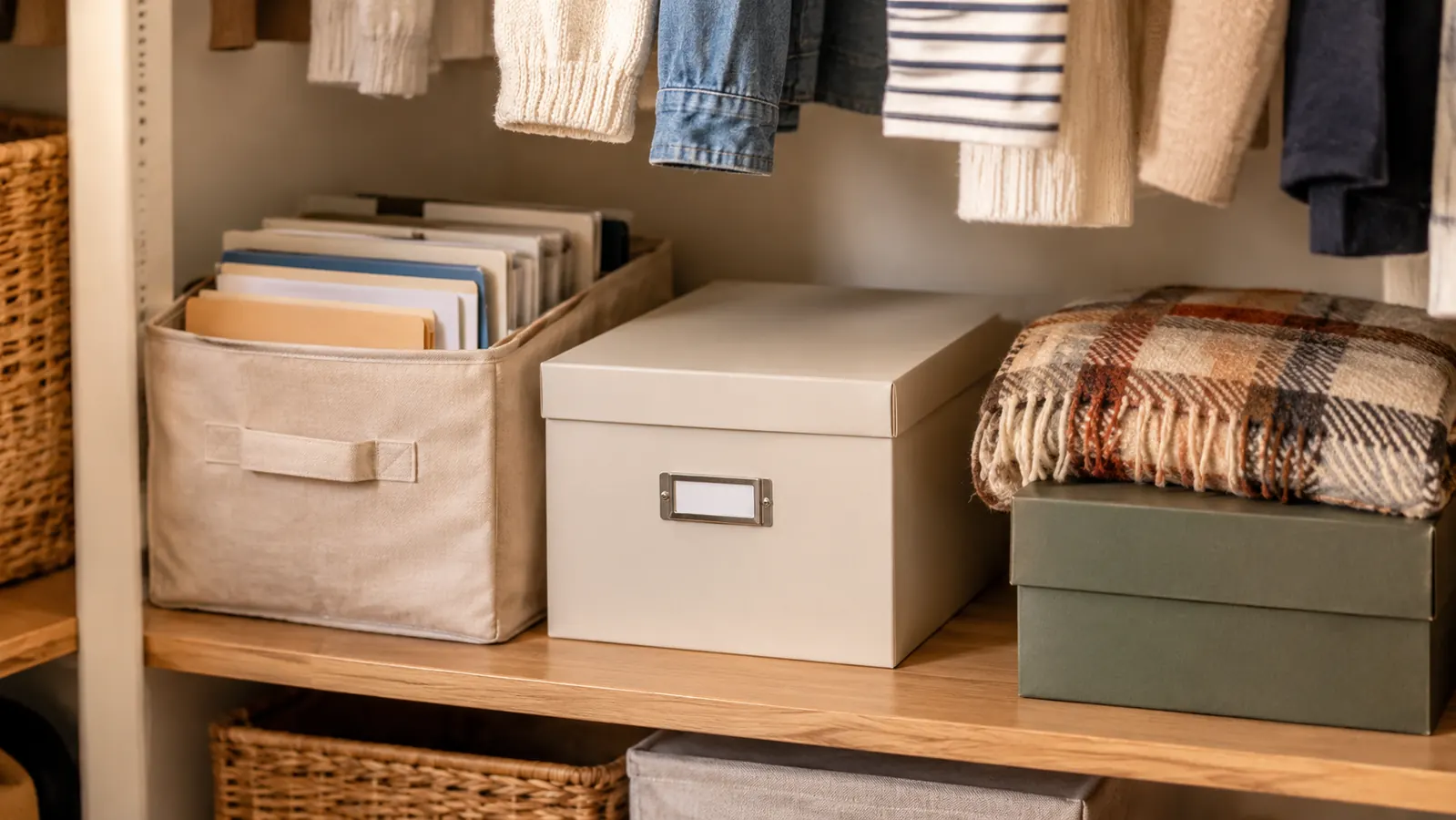
A hard-case document box wins on rigid protection. The shell on the DocSafe is soft. The listing says soft shell, and it is honest. If a box of winter sweaters falls off the shelf above, the DocSafe will flex. A rigid hard case will not. If you are storing a coin collection in cardboard holders, a stack of old photographs that must not bend, or a medal in a presentation case, the rigid walls matter more than the pocket count.
Hard cases also win on stacking. I can put a hard case on the floor of the closet and set two plastic bins on top without worrying about the lid. I would not do that with the DocSafe. The soft top does not carry weight. That is not a defect. It is the trade-off for a 16-ounce box that slides onto a shelf. If your only storage space is a deep shelf above the coats, a hard case may be the better shape.
Some hard cases also carry a stated fire class. That is worth more than a temperature number if you are comparing labels. A class tells you the inside stayed below a certain temperature for a certain time. A material claim tells you what the layers are made to withstand. I want both. When a hard case has a class and the DocSafe only gives a peak temperature, the hard case has the better paper trail. You have to read the label, not the front of the box. A hard case is also the better shape for a handgun, though I keep mine in a biometric safe by the bed, not in a document organizer.
How I Compared Them in a Real Walk-In Closet
I did not test these in a lab. I tested them the way most people will use them, in a single-story ranch house outside Wichita with one walk-in bedroom closet and a shelf that is 12 inches deep. I put the DocSafe on the shelf where I could reach it without a step stool. I set a hard-case box on the same shelf for a week and then moved it to the top shelf, because it took up too much of the space I use every day.
Here is the measure that decided it for me. The DocSafe is 15 by 11 by 4.1 inches. The hard case was deeper and taller, and it did not sit back against the wall the same way. If your shelf is 12 inches deep, the DocSafe can sit with the 15-inch length running along the shelf. A deeper hard case wants to face out, which means it eats the front of the shelf. That is fine if the shelf is only for documents. It is not fine if the shelf also holds towels, extra blankets, and Carol's wrapping paper.
I also counted the trips. In two years, I have carried the DocSafe to the kitchen table maybe a dozen times, for passports before a trip, for a birth certificate when a grandchild needed one for a school form, and for the deed when we refinanced. The hard case stayed on the shelf because it was heavy and awkward. A document box that stays on the shelf is not useless. But a document box you can carry to the table is the one that gets opened, checked, and put back in order.
What the Fire Rating Means at the Kitchen Table
Fire ratings are where people get confused, and I understand why. A number like 5200°F sounds like the box can survive anything. It does not work that way. The DocSafe listing says its 8 fireproof layers can withstand temperatures up to approximately 5200°F. That is a material claim. It tells you what the layers are built to handle. It does not tell you how long the inside stayed cool in a standard test.
A UL class is the other kind of claim. It tells you the inside of the box stayed below a certain temperature for a certain time, usually 30 minutes or an hour, under a specific test. Many hard cases list a class. The DocSafe listing I read does not list one. That does not make the DocSafe a bad box. It means you should read the claim for what it is. The 8 layers and the 5200°F number are better than a plain cardboard box. They are not the same as a tested class.
My rule after thirty-one years of claims work is simple. A fire rating is a head start, not a guarantee. The fire department still has to arrive. The box still has to be found. If you have a two-story house and the box is in the basement, the fire might keep it from you before the heat ever reaches the paper. Put the box where you can grab it. That matters as much as the label.
A fire rating is a head start, not a guarantee. The box you can reach is worth more than the box with the best label on the top shelf.
The Lock, the Zipper, and the Grandkids
The DocSafe closes with a zipper and has a combination lock. I like it for the same reason I like a locking filing cabinet: it stops the casual hand. It will not stop a determined thief with a knife. A soft shell and a zipper are not a security system. If you want theft protection, you need a safe that is bolted down. I have a SentrySafe 1.2 cubic foot safe bolted to the closet floor for the items that need that kind of protection.
The zipper has one advantage over a rigid box: it compresses. When the DocSafe is full, the zipper still closes because the soft shell gives a little. A hard case has a fixed volume. If you add one more folder, the lid may not shut. That is not a reason to overstuff the DocSafe. It is a reason the soft box is more forgiving for a household that adds papers every year.
The combination lock also means no key to lose. I have watched people keep a key on a hook in the kitchen, which is the same as no lock at all. A combination can be shared with Carol without making a copy. It can be changed if a contractor or a house sitter has seen it. That is a small thing, but small things are what make a document box get used.
What Fits Inside, and What Does Not
The DocSafe is 621.48 cubic inches inside. That is not a number most people can picture. Here is what it means in my house. It holds our deeds, passports, birth certificates, Social Security cards, insurance declarations, and a folder of tax returns for the last few years. The 8 passport mesh pockets are good for passports and small cards. The 16 card slots are good for insurance cards, Medicare cards, and the odd gift card. The 4 U Disk pockets hold backup drives. The 7 folder layers keep the paper categories apart.
What it does not hold is a coin collection in hard plastic holders, a stack of photo albums, or a handgun. It also does not hold a large amount of cash in a neat way, though you can put an envelope in the main pocket. The main pocket has a large space, and that is where I put the deed and the will. The point is that the DocSafe is an organizer first. It is not a vault.
If you need to protect a coin collection, use a rigid box with a gasket or a safe. If you need to protect papers and drives, the DocSafe is the right shape. That distinction is the whole comparison. A hard case is a better box for objects. The DocSafe is a better box for paper.
Get the papers off the top shelf and into a box you will actually open
If your deeds, passports and backup drives are in a shoebox or a dresser drawer, the DocSafe is the easier first step. It is 15 by 11 by 4.1 inches, 16 ounces, with a combination lock and 8 compartments. Measure your shelf before you order. Then check today's price on Amazon.
Amazon Check Today's Price on Amazon →Who Should Buy Which
Buy the DocSafe if you are the person who needs to grab the papers. If you have a walk-in closet with a shelf at eye level, if you travel a few times a year, if you have passports, birth certificates, deeds, insurance papers and backup drives that need to stay together, the DocSafe is the box that will get used. It is also the better choice for a household with grandchildren who visit. The combination lock and the zipper keep small hands out without turning the closet into a vault.
Buy a hard-case document box if the job is rigid protection first. If you are storing a coin collection, old photographs that cannot bend, a medal in a case, or anything that would be damaged by a flexing shell, a hard case is worth the space. Buy a real safe if you need theft protection, fire protection with a tested class, or a locked home for a handgun. The DocSafe is not a substitute for a safe. It is a better first step for paper. If you are not sure, buy the DocSafe and put the truly valuable objects in a safe. That is what I did.
Start with the box that fits the shelf you actually have
A document organizer only helps if it is where you can reach it. The DocSafe is 16 ounces, 15 by 11 by 4.1 inches, and it has the pockets to keep papers apart. If that matches your closet, check today's price on Amazon. If you need rigid walls, buy the hard case. Either way, do not leave the deed in a dresser drawer for another year.
Amazon Check Today's Price on Amazon →