
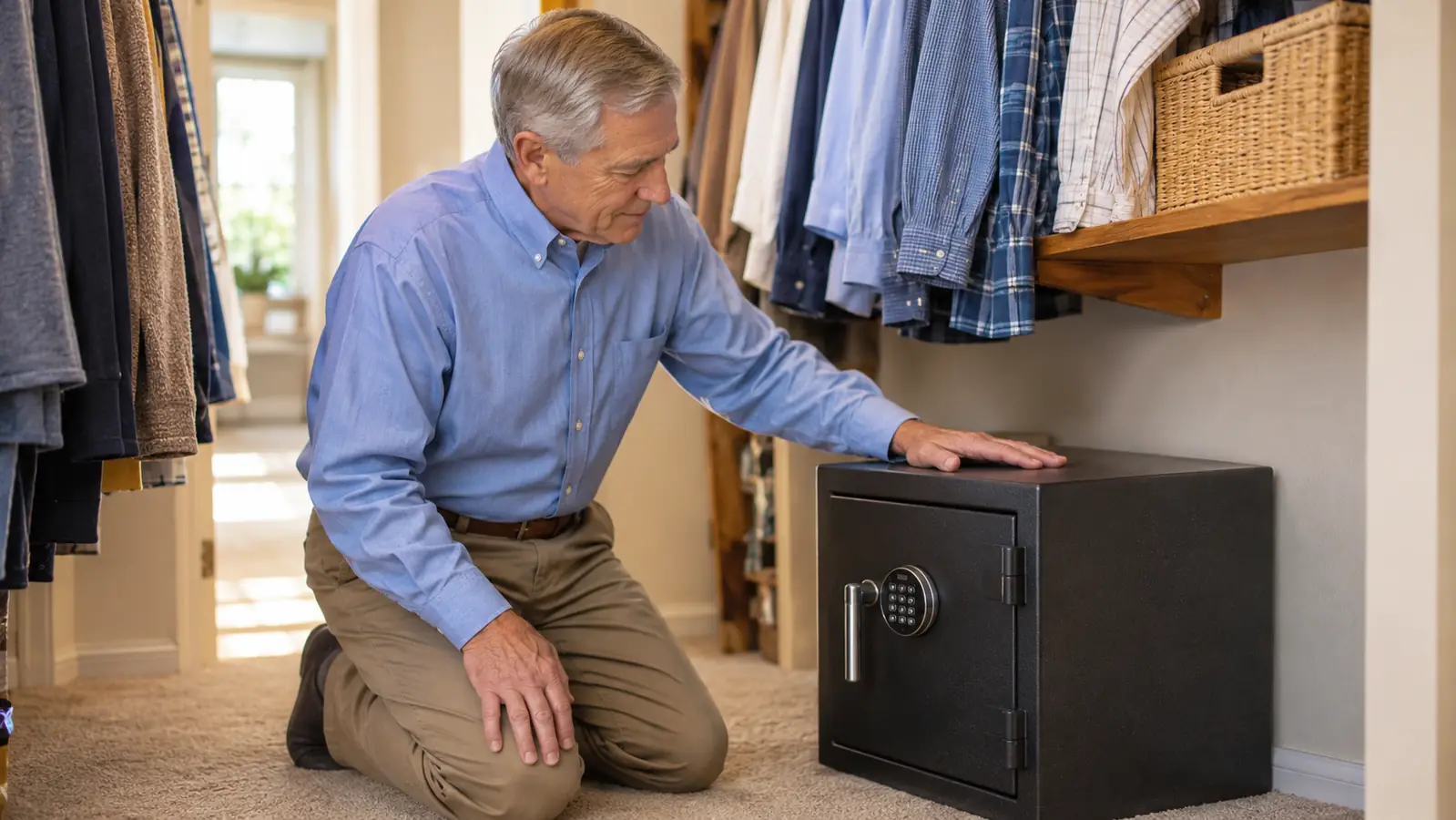
A safe that is not fastened to anything is a heavy box with a handle on it. I spent thirty-one years as a homeowner insurance claims adjuster, and I have stood in more than one bedroom where the only thing left behind was a clean rectangle of carpet and four small holes in the floor. Nobody cracked the lock. They picked the box up, walked it out the back door, and took their time with it in a field somewhere. That is the whole reason I care about bolting one down, and it is why I anchored mine before I put a single document inside it.
The SentrySafe STW123GDC is the one sitting in my walk-in closet. It holds 1.23 cubic feet, it weighs 90 pounds, and it carries two ratings I can explain at a kitchen table. UL Classified to take one hour at 1,700 degrees Fahrenheit, and ETL Verified for 24 hours in water up to 8 inches deep. The lock is a digital keypad with a key backup. All of that is worth roughly nothing if the box is loose on the floor, because a rating only protects the safe that is still in the house when the fire truck pulls up.
The Box Is Rated. The Bolts Are Your Job.
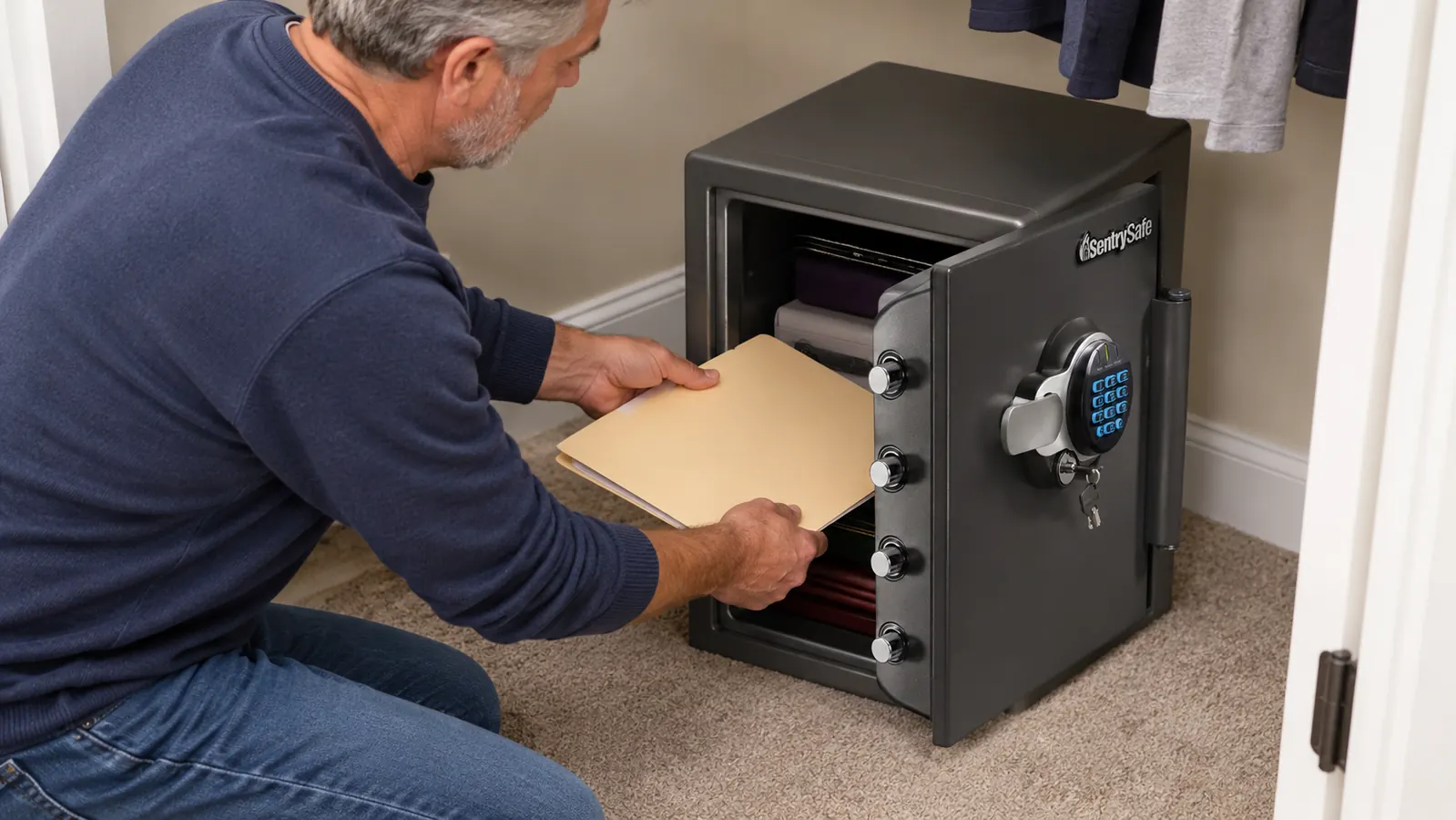
This is the same 1.23 cubic foot SentrySafe I anchored to my closet floor. 90 pounds, one hour at 1,700 degrees Fahrenheit, 24 hours in 8 inches of water, keypad with a key backup. Read the ratings once, then read step four twice.
Amazon Check Today's Price on Amazon →What Bolting Down Actually Buys You
Bolting down does not make a safe fireproof. The fire rating does that, and the rating is honest about its limits. What bolting down buys you is time and noise. A 90 pound box with a handle on it is a forty second theft for two men with a hand truck. The same box bolted to a slab is half an hour of prying, a lot of noise, and a set of tools nobody wants to carry into a house at night.
That is the trade you are making. Not safety, not a guarantee, just a slower thief and a louder one. In thirty-one years of claims I never once met a burglar who wanted to spend thirty minutes in a closet making a racket. They want to be in and out before the dog next door starts up.
It also settles the water question. A safe rated for 24 hours in 8 inches of water does that rating no good floating across a basement. Bolted to a floor, it stays where the water finds it and the seal does the job it was tested for.
Step 1: Pick a Spot You Can Reach in the Dark and Water Cannot Reach First
Mine sits on the floor of the walk-in closet, on the ground floor, against an interior wall it shares with the hallway. Three things drove that choice. I can reach it in the dark without going down a stairwell. It is not in the basement, which took on water in a spring storm a few years back. And it is not in the attached garage, where summer heat and a shelf full of tools make a steel box easier to find and easier to walk off with.
The water rating on this safe is 24 hours in 8 inches of water. That is a real number and I am glad to have it, but 8 inches is the depth of a bad afternoon, not the depth of a flood. A basement with a foot of standing water in it is past what any residential box is promising you. Put yours where a burst supply line gives you a wet floor, not where a storm gives you a swimming pool.
Think about heat the same way. An interior closet beats a shelf beside the furnace or the water heater. One hour at 1,700 degrees is a head start, not a shield, and giving the safe the coolest spot in the house you can actually get to is how you spend that hour well. If the only spot that fits is next to the furnace, find a different spot.
Step 2: Measure the Move Before You Lift 90 Pounds
The outside of the box is 19.3 inches deep, 16.3 inches wide, and 17.8 inches high. Those numbers decide where it can live. Measure the closet floor, then measure the front doorway, then measure the hallway turn between the two. Ninety pounds is not a refrigerator, but it is enough to hurt a back and enough to take a bite out of drywall if it gets away from you on a corner.
The inside is its own set of numbers. The chamber runs 8 inches wide, 11.9 inches deep, and 13.8 inches high. Before anything gets bolted down, lay out what you plan to keep in there. My deed folder and the passports fit with room to spare. The coin collection went into two smaller boxes. Learning that on the kitchen table beats learning it after the safe is anchored and the will binder will not clear the door frame.
Two small tricks. Take the closet door off its hinges if it swings inward and you need the clearance. Put a sheet of heavy cardboard under the safe and slide it the last six feet instead of carrying it. Both take two minutes, and both have saved me a floor and a temper.
Step 3: Set the Combination and Park the Backup Key Somewhere Else
Set your own combination before the safe goes anywhere near the floor. SentrySafe lets you choose it, which means the code is your decision and your problem. Skip the birthday, the anniversary, and the last four digits of a phone number. Those are the first four numbers anybody who knows your family will try.
The keypad also takes a secondary locking key, and the key is the part people handle badly. It does not live in the closet. It does not live in the nightstand beside the bed. It does not get taped to the back of the safe, which is the first place a thief looks and the first place a house fire reaches. Give it to a grown child who lives in another town, leave it in a desk drawer at work, or hand it to the one neighbor you would trust with a house key. Anywhere but the room with the safe in it.
Then test the combination four or five times with the door standing open. Test the key too, with the door still open. A code that was entered wrong is an annoyance on a workbench and a genuine mess on a locked, bolted, 90 pound box holding your passports.
Step 4: Anchor It to the Floor and Do Not Over-Tighten the Bolts
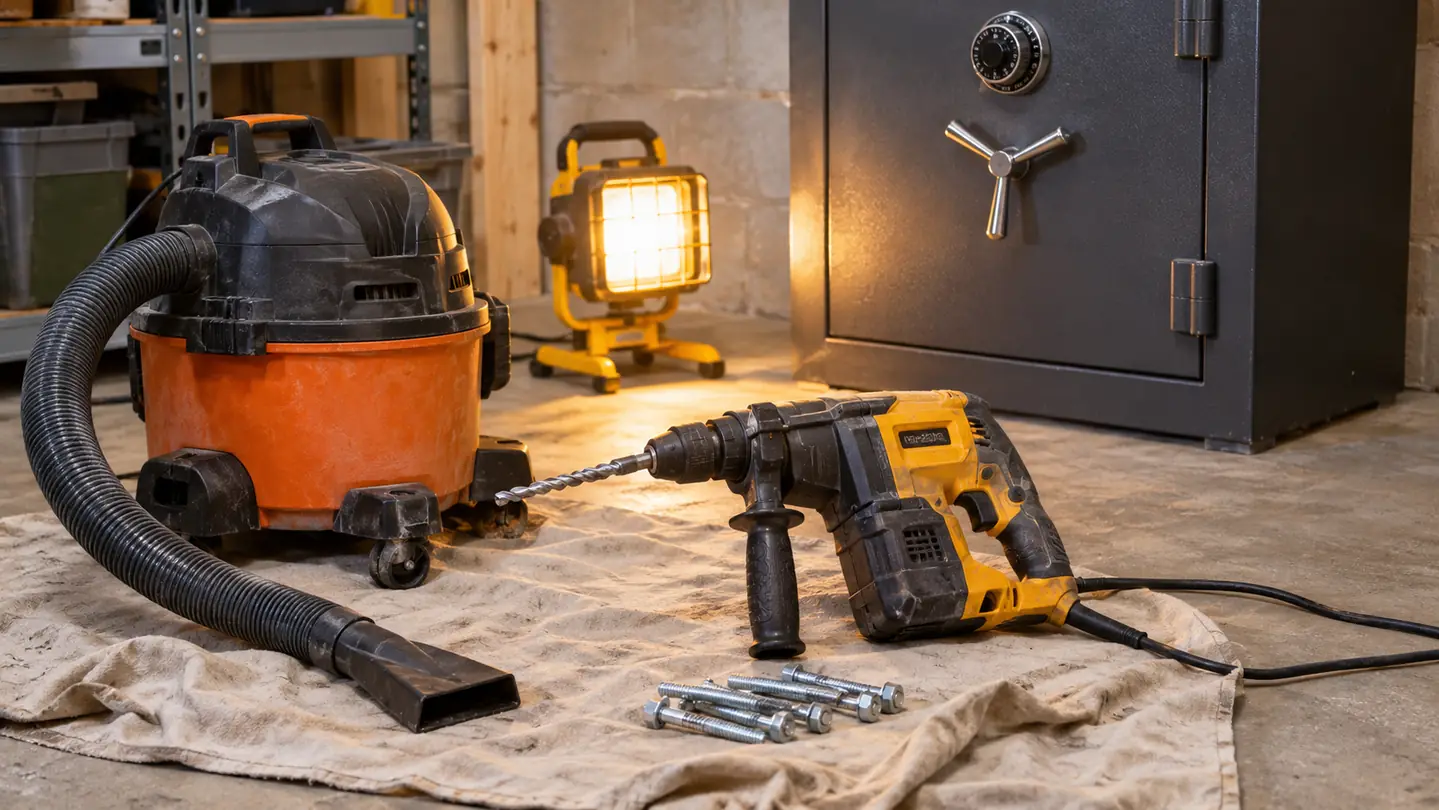
SentrySafe builds this model for floor mounting, and the floor is where it should stay. On a concrete slab that means a hammer drill, a bit matched to your anchor, and hardened anchor bolts long enough to bite into solid concrete instead of the thin crust on top of it. On a wood subfloor it means lag bolts into the joists, not into plywood alone. If you do not know which floor you have, drill a small test hole where the carpet will hide it.
Vacuum the dust out of the holes before the anchor goes in. Set the safe down, check it with a level, and then run the bolts in snug. Stop there. There is no prize for the tightest bolt, and over-tightening an anchor in an older slab can crack the concrete around it and leave you with a bolt that turns forever.
Open and close the door three or four times once it is bolted. Listen for a drag or a scrape that was not there before. If the floor was not flat, the box can flex just enough to matter, and you want to learn that while the closet is still empty. This model also carries an anti-theft alarm, and now is the time to test it, when a false trip costs you nothing but a little embarrassment.
Step 5: Load It in the Right Order and Prove That It Shuts
Heavy at the bottom, papers up top, nothing loose enough to rattle. The deed, the wills, the passports and the birth certificates go in first, and they go in a zip bag even though the box is rated waterproof. The coin collection is heavy enough that it belongs on the floor of the chamber. Carol's mother's jewelry goes in a soft pouch so it does not scratch. The handgun goes in with a trigger lock on it and the ammunition stored somewhere else.
Then photograph the open safe with everything inside it. Take four pictures, one per side of the chamber. You are not doing that for the insurance company, although they will want it. You are doing it because after a fire or a break-in you will not remember what was in there, and a photo taken on a quiet Tuesday afternoon is worth an hour of trying to rebuild the list from memory.
Shut it, lock it, and open it again with the keypad and with the key. Do that once a month for the first year. A safe you cannot open is an expensive filing cabinet, and the morning you need a passport is not the morning to find out the keypad has been dead for a while.
One hour at 1,700 degrees and 24 hours in 8 inches of water are good numbers. They only apply to the safe that is still bolted to your floor when the smoke clears.
The Mistakes I See Most Often
The first mistake is bolting a safe to a shelf or hanging cabinet instead of the floor. A shelf is a lever, and 90 pounds of steel on a lever comes down on whatever is underneath it, including a foot. Floor mounting is what this model is built for, and it is what I would do even if it were not.
The second is putting the backup key somewhere clever. Under the mattress, inside the nightstand, on top of the door frame in the same closet. Every one of those is a place a burglar checks in the first ninety seconds. Clever is the opposite of what you want here. You want the key in a different building.
The third is filling the box the same day you bolt it and then never testing it again. Half the safes I saw in my working years had not been opened in three years. If the lock has seized or the keypad has gone quiet, you want that news on an ordinary Wednesday in your own closet, not on the worst day of the year.
What Else Helps
Keep a written inventory outside the house and keep the combination with it. I have a one page list in a drawer at our daughter's place, and Carol knows exactly where it is. That sheet of paper has solved more problems for this family than any lock I have ever bought.
A small fireproof document bag inside the SentrySafe costs little and gives the paper a second layer. One hour is exactly what one hour sounds like. A bag will not stretch that hour far, but it will keep hose spray off a passport when the box gets opened in the driveway at two in the morning.
Check the keypad every few months and put a reminder in your phone to change its batteries. Run a finger around the door seal and look for grit. Put a hand on the anchor bolts once a season and see that nothing has backed out. None of that is interesting, and all of it is the difference between a safe and a storage box.
And tell one other person where the safe is and how to get into it. If something happens to you, that box should not turn into a puzzle for your own children. That is not a hole in your security. That is a plan.
Bolt It Down Once and Stop Thinking About It
90 pounds of alloy steel, one hour at 1,700 degrees Fahrenheit, 24 hours in 8 inches of water, and a keypad you set yourself. The ratings are on the box. The anchor bolts are on you.
Amazon Check Today's Price on Amazon →