
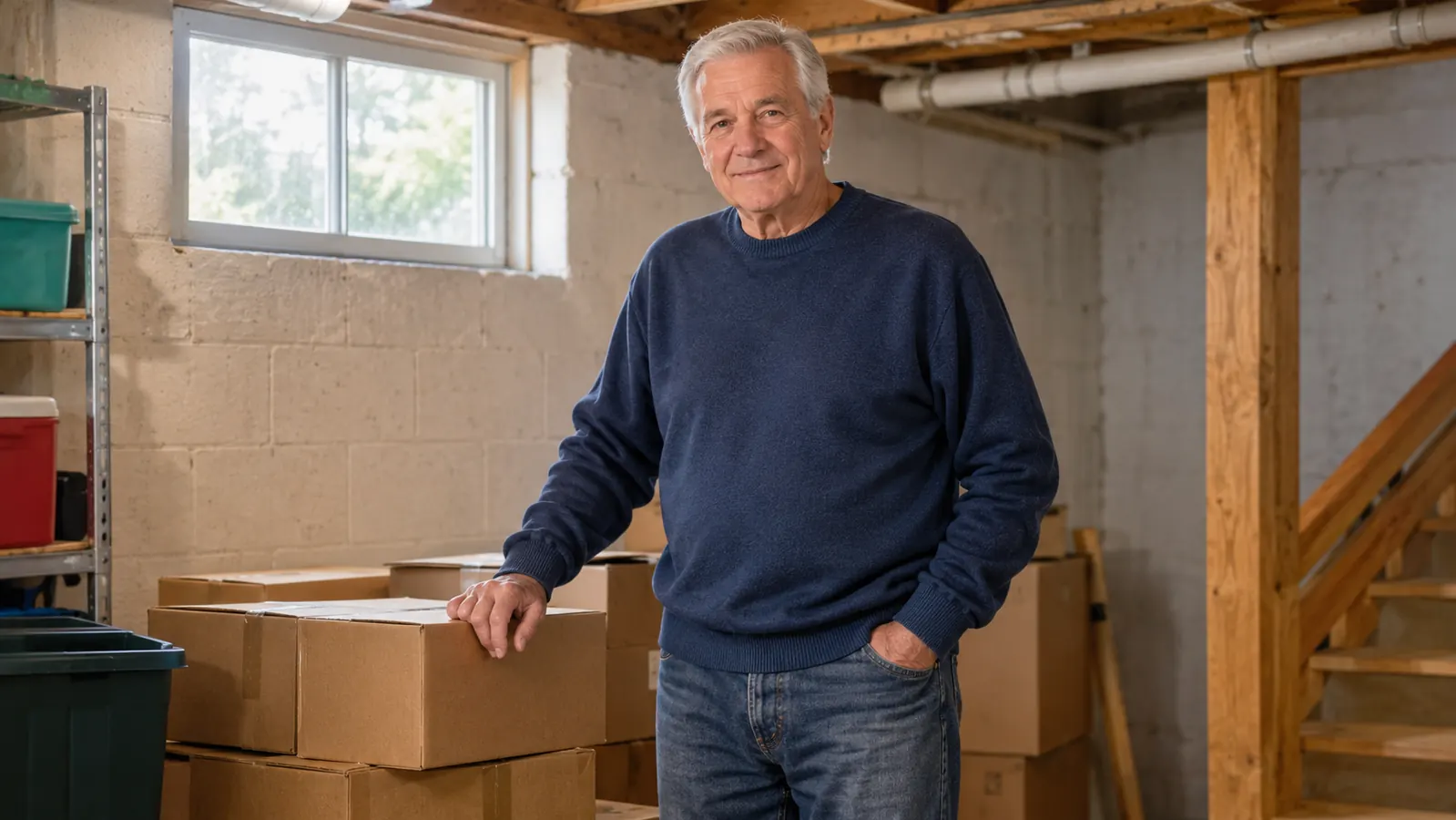
The water in our basement outside Wichita did not come in like a river. It came up through the floor drain on a Thursday night in April, quiet enough that Carol and I did not know until Friday morning. I spent 31 years as a homeowner insurance claims adjuster, so I knew what I was looking at. The first thing I thought about was not the box of Christmas decorations. It was the folder in the bottom drawer of my desk.
That folder held the deed to the house, our passports, the wills, the birth certificates, and the backup drives from our family photos. We got lucky. The water stopped at two inches, and the folder was damp at one corner but readable. Carol said we needed a safe. We already had a cheap lockbox, the kind that opens with a key no thicker than a nail. It would not have helped. About a month later we bought a SentrySafe 1-Hour Fireproof Safe, the STW123GDC, a 1.2 cubic foot model with a digital keypad and a secondary key. It is bolted to the floor of our walk-in bedroom closet now and has been there about 18 months.
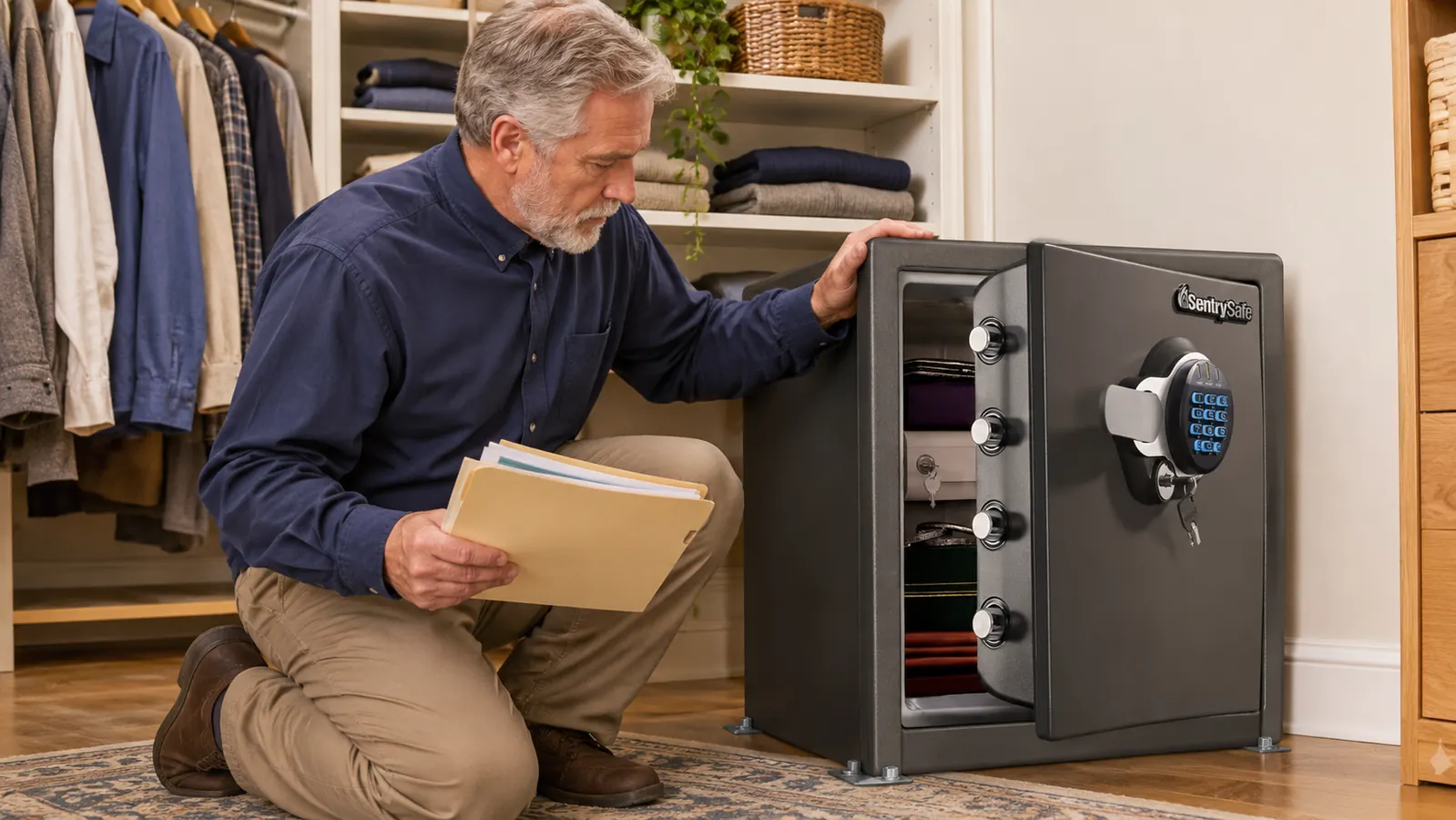
I am not going to tell you a safe makes you safe from everything. That is not how insurance works either. What I can tell you is what the label means in plain terms. The SentrySafe is UL Classified to endure 1 hour at 1700°F and keep the inside at a temperature that will not ruin paper. It is ETL Verified for 24 hours of protection in water up to 8 inches deep. That water rating matters to me more than the fire rating, because the flood was ours. I have walked through house fires too, but the flood is the one I lived through.
The safe weighs 90 pounds. Outside it measures 19.3 inches deep, 16.3 inches wide and 17.8 inches high. The inside chamber is 8 inches wide, 11.9 inches deep and 13.8 inches high. That is not a closet. It is a strong box. It holds our deed binder, the passports, my father's coin collection in three small flips, Carol's mother's jewelry in a cloth roll, and a fire-rated envelope for the emergency cash. The handgun does not live in this safe. I keep it in a separate biometric safe bolted near the bed, away from where the grandchildren sleep.
The keypad is a digital combination you set yourself, and there is a secondary key for backup. I am 71 and I can work it without my glasses. The key stays in a drawer, not on top of the safe. The body is alloy steel. The spec sheet lists an anti-theft alarm and floor mounting, which is why I bolted it down. A safe you can carry off is a safe for somebody else.
The one thing I would change is the weight. Ninety pounds empty is not a package you move on a whim. We put it in the closet and left it there. The warranty is a limited one year, which is not generous. I have not needed it. The SentrySafe has done its job, which is to sit there and be boring.
A fire rating is a promise about time. One hour at 1700 degrees is not forever. It is enough time for the fire department to get there.
The safe that held our papers through the flood
If your important papers are in a drawer or a shoebox, start with the one that is bolted down. The SentrySafe STW123GDC is the model in our closet.
Amazon Check Today's Price on Amazon →
What I know now is that most people do not lose their papers in a fire. They lose them in a hurry. I have seen deeds in a plastic grocery bag under a sink. I have seen passports in a cereal box. I have seen a family spend a week proving who they were after a pipe burst. The hard part is not buying the safe. The hard part is the week.
The SentrySafe is not a bank vault. The body is alloy steel, the lock is an electronic combination with a secondary key, and the spec sheet lists an anti-theft alarm. I would not leave a watch collection in it for a month. I would leave the papers that take a month to replace. That is the trade. You get fire and water protection in a box that fits in a closet, and you give up the idea that you can hide it under a bed.
We also keep a small DocSafe organizer for the passports and the birth certificates. That was about two years ago, before the flood. It is a folder, not a safe. It kept the papers together, but it would not have kept them dry. The SentrySafe is the thing that would have kept them dry. That is the difference between organizing a problem and solving it.
If you are going to buy one, measure the closet first. The SentrySafe needs 19.3 inches of depth, 16.3 of width and 17.8 of height, and you need room to open the door. It is 90 pounds, so get help moving it. Bolt it down. Put the key somewhere you will remember, not in the lock. And do not put the safe in the basement if the basement is the thing that floods.
What I'd Tell You If We Were Sitting at My Kitchen Table
Now that the water is gone and the closet floor has a safe bolted to it, here is what I would tell you if we were sitting at my kitchen table. Take the folder out of the drawer tonight and look at it. If you would be sick to lose what is in it, put it in something rated for fire and water and bolted down. Do not buy the cheapest box at the hardware store and call it done. The SentrySafe is the one I own. It is not the biggest and not the fanciest. It is 1.2 cubic feet, enough for a family's papers and a few things you cannot replace.
Put the papers in something that stays put
One hour of fire protection and 24 hours of water protection in up to 8 inches. That is the rating on the SentrySafe in our closet. It is a start, not a guarantee.
Amazon See the SentrySafe STW123GDC on Amazon →